MentorPass
mentorpass.co
Get access to the world's top e-commerce experts.
97.3K visits/mo
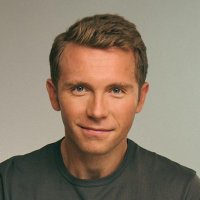
Harry Stebbings covers tech founders, AI markets, and venture capital through the 20VC podcast and fund.
🎤 @twentyminutevc, 🏦 @20vcfund, @projecteurope_😇 @fuseenergy @linear @wearelegora @factoryai @lovable @airwallex @mercor_ai @workos @fomo @fireworksAI_HQ
7d follower delta is accumulating (tracked since 2026-11-22); 7d net growth appears after multi-day follower snapshots are recorded.
Get access to the world's top e-commerce experts.
intersection of venture capital and media
Select a ★ growth spike to view that day’s trigger post and interactions
No single breakout post linked on this date.
No tracked creator interactions recorded on this date.

One of the most insane stories in tech and investing is @AnjneyMidha.
- Started his career as a 21-year-old, learning from John Doer and Brooke Byers at Kleiner Perkins.
- He then co-founded a company that sells to Discord.
After selling the company, he then takes his personal money and becomes one of the first investors in Anthropic. To date, he has invested over $300M into the company. WOW.
- He also becomes an angel in @ElevenLabs with @mati.
- He then becomes a partner @ a16z, leading rounds in Mistral and Black Forest Labs with @robrombach.
- He then leaves the golden halls of a16z to found Amp. Building an independent AI grid and next-generation investment firm.
This show has more bangers than a Benchmark portfolio and my notes below:
--------------------------------------
1. The Intellectual Dishonesty of Silicon Valley VCs on Their Marks
Growth funds put pension, sovereign and retirement money into payroll SaaS, fintech and crypto at 2021 valuations, and those marks are not real. Judgment Day is starting now, as GPs try to convince LPs the marks should still hold.
Do you think this is fair and right @honam @infoarbitrage @chadbyers
2. We Have Been Selling Chips to China That We Fundamentally Should Not Have Sold
Large US clusters that universities could use for frontier research have been secured by state-sponsored Chinese labs. One 24,000 cluster was pre-sold to one of the four largest Chinese companies, though American teams were willing to pay. Neoclouds lacked credit support, so they leaned on Chinese labs paying upfront.
Do you think this is fair and what are we not seeing that we should see @rabois @shaunmmaguire
3. Why Is So Much of Venture Capital Glorified Bankers With Spreadsheets?
Much of venture's roughly $800 billion is run by former bankers with no technical or scientific training. Many missed Anthropic's early days and still miss the best infrastructure companies because they don't understand the technology.
Love to hear your thoughts on this and how you see the background of the next decade of VCs @mhdempsey @martin_casado @taavet
4. How Do We Solve the Energy Supply Crisis and Compete With China?
America has over 100 gigawatts of stranded power. Much frontier progress will come from reinforcement learning and post-training, which suit decentralized compute, and about 50% of portfolio compute spend is now in post-training.
What does no one see that every should see about the current energy supply side @ZachBDell @alanchanguk @GavinSBaker
5. Why We Need to Ban Tranched Rounds
Tranches used to market businesses with no execution milestones to LPs for co-investment create markups that are smoke and mirrors. It is the same banker behaviour that led to the subprime mortgage crisis.
Love to hear your thoughts on this @PhilipJohnston @BrendanFoody
6. Why the Inference Layer Is Uninvestable and It Will All Be Brought In-House
Inference is too core to a research team's customer feedback loop to stay outsourced. The best teams buy, partner, then build, as Anthropic and Mistral did, so inference becomes a feature rather than a standalone product.
What is the counter? What does this miss @bernhardsson @deedydas @lqiao
7. Why We Need to Be Much Kinder to Colette Kress and Why She's Doing a Great Job as New CEO
No CFO is more technical on chips, throughput, token prices and supply chain, and Jensen has handed her earnings questions she answers with rigor. Anybody else in her situation would have crumbled. She could be retired but puts the mission and customers first.
(links in comments)
Why Factory is so much better than Cognition
“We used to be on Devin and Cognition, and the problem with Cognition was that it was just so expensive.
The tokens you use on Factory end up going, like, 10X higher than they do on Devin. Factory is just so much cheaper.
I think the underlying harness of Factory somehow is better than the Devin one.” @bavaria_kush
Love to hear your thoughts @matanSF @ScottWu46 @swyx @simonw
He is going to hate me for saying this, but I think one of the smartest people in venture is @milesgrimshaw, hands down.
So when he calls me and tells me about an incredible entrepreneur that I have to have on 20VC, I listen.
He told me the tale of @bavaria_kush:
- 23-year-old whiz - Built viral sports betting platform from his dorm at MIT - Started @OrnnExchange, the financial market for AI compute. - Insanely profitable
So I got on a call with him. Within 5 mins of the call, I asked him to join me on the show.
I summarized the notes from our discussion below:
Thanks to @AdamValkin, @fachlib, @Melt_Dem for amazing questions. (Links in Comments)
--
1. Why NYC Is a Better Place to Build a Company Than SF
Kush argues that people in the Valley are coin-operated, so $100K more in pay or 50 bps more equity is enough to move a researcher to another company. New York has a culture of loyalty to colleagues and family, with much more camaraderie between people than in SF.
Love your thoughts on this given your time both in and outside the valley @paulg @rabois
2. Humans Will Simply Be a Vessel to Carry AI Around the World
Kush believes AI will become so much smarter than people that humans end up as a biological vessel for it. The human role then is less about controlling AI and more about teaching it feelings and emotions, almost as a parent.
Love your thoughts on this @bryan_johnson and how that impacts your work?
3. How Undersupplied on Chips Are We Truly?
Compute is very undersupplied. Buying from CoreWeave today likely means a quote for Q4 2027 or Q1 2028. Building your own takes about half a year, with 20 to 22 weeks to get chips from OEMs, who tend to promise earlier dates, plus two to three weeks to install.
What does no one know that everyone should know about the current state of chip supply @andrewdfeldman @goodwin_ml @UbertiGavin
4. Why Factory Is So Much Better Than Cognition
Ornn used Devin for a while, but the problem with Cognition was how expensive it was. Kush sees the two as competitors on the same product and says Factory is much cheaper to use. He also rates Factory's underlying harness above Devin's.
I am sure @shaunmmaguire will be smiling here.
5. Why You Should Always Choose Boutique Investors Over Mega Fund Investors
Boutique investors care more about founders because their success is tied directly to the company's. Partners at boutique firms are often there for the mission, and the firm itself is like a startup trying to make its name, so they work extremely hard to make their companies succeed.
Love to hear your thoughts on this @wquist @honam @annbordetsky
6. Why Infrastructure Investors Will Never Lose
Kush compares data centers to apartment buildings, with infrastructure investors as landlords and inference providers, OpenAI and Anthropic as tenants renting GPUs. As long as there are tenants, the landlords keep collecting rent. If enterprise demand weakens, GPU prices fall the way rents do in a bad economy.
7. Chip Prices in Three Years Could Be Higher Than Today
When Ornn started, many assumed GPU hour prices three to five years out would be lower, so contracts often included free options to renew at prices like $2.50.
No one gives that for free now, because the market expects prices in three years may be higher than today. Kush would not be surprised to see $20 to $30 per GPU hour.
What does no one see that everyone should see about the price of compute moving forward @AnjneyMidha?
Is it just me or is half my X feed these days just Americans realising that London is the greatest city on earth. 🤣
We wanted Sonya Huang more than we wanted Sequoia.
“I did not want their money. I wanted @sonyatweetybird. That is why Sequoia is around.
She is not just brilliant, but a very unique type of brilliant that I think we extremely want on our side.
No matter how many advisers I talk to, if I have a conversation with Sonya, I get a different, very interesting perspective. She is an incredibly valuable thought partner.” @CompleteSkeptic
Single biggest lesson from working with Sonya @shaunmmaguire @Alfred_Lin @RoelofBotha @gradypb
So Diogo Almeida is one of the most fascinating CEOs I have ever interviewed.
born in the Philippines
2008: wins bronze for the Philippines at the International Mathematical Olympiad
2013: starts his career as a software engineer at Amazon
2017: joins Google Brain, working on cutting-edge deep learning research
2018: leaves Google Brain and takes roughly 18 months off to figure out what makes him happy
travels the world, experiments with improv, art and meditation
becomes a top-30 League of Legends player
discovers that none of it makes him particularly happy
2020: joins OpenAI when it's still a relatively obscure research laboratory
helps develop reinforcement learning from human feedback (RLHF), the technique that transforms how people interact with AI
2022: co-authors the landmark InstructGPT paper
the work becomes foundational to ChatGPT
November 2022: ChatGPT launches and becomes one of the fastest-growing consumer products in history
2023: contributes to GPT-4, one of the most important model releases in AI history
but starts questioning the fundamental assumptions behind the technology he helped build
2024: leaves OpenAI while ChatGPT is exploding in popularity
people think he's crazy for walking away
co-founds TypeSafe AI with Erik Gafni and Sasha Sheng
spends two years in stealth developing an entirely new class of AI models
September 15, 2026: launches Jev, TypeSafe's first System One model
Company makes $100M in revenue in the first 7 days of launch
raises a reported $40M seed round led by DCVC
October 2026: a reported $870M Series A at a $7.5B valuation, backed by a16z
argues that the next breakthrough in AI will come from making intelligence cheap, reliable and autonomous
My notes from my discussion with @CompleteSkeptic below:
1. Why Jevons' Paradox Does Not Cut It. We Are Going to 10x That
Diogo expects a "mega Jevons paradox", with usage that dwarfs the token consumption of LLMs and AI running in the background everywhere. He expects people to stop seeing AI as something that "slops crap at them" and start seeing it as something that makes life better.
2. Why SaaS Incumbents Are Better Positioned Than OpenAI and Anthropic in Many Application Spaces
SaaS companies know their customers' workflows and have the scale to fund the upfront engineering that real automation requires. Diogo argues their edge comes from being closest to the problems, not from distribution. Teams inside products like TurboTax know where to improve the interface, while OpenAI and Anthropic are "still living in their ivory tower."
3. Why We Do Not Hire From OpenAI
Diogo sees getting into OpenAI as an anti-signal and says its researchers love algorithms and scaling but hate data. Data is a low-status topic at most labs, and the few people focused on the right task would want to pursue their own. That leaves researchers obsessed with algorithms, which he likens to throwing money in the furnace.
4. How the AI Bubble Could Burst and Where the Demand Shock Could Be
Part of today's AI demand is driven by FOMO, from people believing they are getting good results. Diogo finds many buyers miscalibrated and overestimating what AI can do. Once they face the realities of its capabilities, demand could fall quickly.
5. What Metric Did ChatGPT Optimize for in the Early Days?
Before Claude Code, ChatGPT was optimized for monthly active users rather than the best chatbot experience, which is how sycophancy emerged. Companies are now optimizing for the MAU equivalent in coding agents. Without a dedicated model, Diogo doubts they will produce a comparable one soon.
6. Why the Talent Market Is Not Crazy for Us and We Don't Pay for Mercenaries
TypeSafe pays people good amounts but not the highest, which filters out hired guns. Diogo says Anthropic is suffering from mercenaries because it pays more than anyone else, and an entire market now exists to prepare candidates for Anthropic culture interviews.
7. We Wanted Sonya Huang More Than We Wanted Sequoia
Diogo did not want Sequoia's money and brought the firm in because of Sonya. He values her particular shape of brilliance, which offers a perspective no other advisor gives him. One TypeSafe value is to make great decisions slowly, and he sees her as a valuable thought partner for that.
(links in comments)
Such a good shout from Shaun here.
Hands down, Nikesh would be the single best replacement for Jensen.
No better CEO in the last 10 years to me.
He is the man to lead us forward in AI.
Now that Jensen is out, my pick for his successor would be Nikesh Arora (@nikesharora)
IMO Jensen was so important for the AI ecosystem because he was:
1) technical 2) aggressive 3) had the credibility required to be aggressive
What Nikesh did at Palo Alto the last 8 years is remarkable, and reflected in its stock (up 10x)
He’s one of only a handful of people who have the credibility required to be aggressive on day 1
Nikesh has the three attributes listed above while being a world class deal maker and having all the necessary relationships to keep NVDA at the center of the AI ecosystem
There’s no easy choice but he’d be my go to
Why I am sick of the status games around researchers in San Francisco
“I am so sick of the status games, especially in SF, where ML researchers are a higher tier than ML engineers, which are a higher tier than software engineers.
I think that is completely messed up.
My hope is that we can create a new type of role: a software researcher, someone who actually pushes the boundaries of software.” @CompleteSkeptic
Love to hear your thoughts @vboykis @eugeneyan @sh_reya @jeremyphoward
So Diogo Almeida is one of the most fascinating CEOs I have ever interviewed.
born in the Philippines
2008: wins bronze for the Philippines at the International Mathematical Olympiad
2013: starts his career as a software engineer at Amazon
2017: joins Google Brain, working on cutting-edge deep learning research
2018: leaves Google Brain and takes roughly 18 months off to figure out what makes him happy
travels the world, experiments with improv, art and meditation
becomes a top-30 League of Legends player
discovers that none of it makes him particularly happy
2020: joins OpenAI when it's still a relatively obscure research laboratory
helps develop reinforcement learning from human feedback (RLHF), the technique that transforms how people interact with AI
2022: co-authors the landmark InstructGPT paper
the work becomes foundational to ChatGPT
November 2022: ChatGPT launches and becomes one of the fastest-growing consumer products in history
2023: contributes to GPT-4, one of the most important model releases in AI history
but starts questioning the fundamental assumptions behind the technology he helped build
2024: leaves OpenAI while ChatGPT is exploding in popularity
people think he's crazy for walking away
co-founds TypeSafe AI with Erik Gafni and Sasha Sheng
spends two years in stealth developing an entirely new class of AI models
September 15, 2026: launches Jev, TypeSafe's first System One model
Company makes $100M in revenue in the first 7 days of launch
raises a reported $40M seed round led by DCVC
October 2026: a reported $870M Series A at a $7.5B valuation, backed by a16z
argues that the next breakthrough in AI will come from making intelligence cheap, reliable and autonomous
My notes from my discussion with @CompleteSkeptic below:
1. Why Jevons' Paradox Does Not Cut It. We Are Going to 10x That
Diogo expects a "mega Jevons paradox", with usage that dwarfs the token consumption of LLMs and AI running in the background everywhere. He expects people to stop seeing AI as something that "slops crap at them" and start seeing it as something that makes life better.
2. Why SaaS Incumbents Are Better Positioned Than OpenAI and Anthropic in Many Application Spaces
SaaS companies know their customers' workflows and have the scale to fund the upfront engineering that real automation requires. Diogo argues their edge comes from being closest to the problems, not from distribution. Teams inside products like TurboTax know where to improve the interface, while OpenAI and Anthropic are "still living in their ivory tower."
3. Why We Do Not Hire From OpenAI
Diogo sees getting into OpenAI as an anti-signal and says its researchers love algorithms and scaling but hate data. Data is a low-status topic at most labs, and the few people focused on the right task would want to pursue their own. That leaves researchers obsessed with algorithms, which he likens to throwing money in the furnace.
4. How the AI Bubble Could Burst and Where the Demand Shock Could Be
Part of today's AI demand is driven by FOMO, from people believing they are getting good results. Diogo finds many buyers miscalibrated and overestimating what AI can do. Once they face the realities of its capabilities, demand could fall quickly.
5. What Metric Did ChatGPT Optimize for in the Early Days?
Before Claude Code, ChatGPT was optimized for monthly active users rather than the best chatbot experience, which is how sycophancy emerged. Companies are now optimizing for the MAU equivalent in coding agents. Without a dedicated model, Diogo doubts they will produce a comparable one soon.
6. Why the Talent Market Is Not Crazy for Us and We Don't Pay for Mercenaries
TypeSafe pays people good amounts but not the highest, which filters out hired guns. Diogo says Anthropic is suffering from mercenaries because it pays more than anyone else, and an entire market now exists to prepare candidates for Anthropic culture interviews.
7. We Wanted Sonya Huang More Than We Wanted Sequoia
Diogo did not want Sequoia's money and brought the firm in because of Sonya. He values her particular shape of brilliance, which offers a perspective no other advisor gives him. One TypeSafe value is to make great decisions slowly, and he sees her as a valuable thought partner for that.
(links in comments)
Founders destroy their fundraising round because of one simple mistake.
They do not prep the messaging with existing investors before going out to raise.
There is a lingo to VC. Like it or not. There are things to say and things to not say.
Positioning is so important. Fundraising is simply a packaging game.
Spend the time. Sit down with an existing investor, make sure you have the right packaging.
Otherwise, you will go out, speak to 40 VCs, with the wrong messaging, the round will not convert and it is hard to come back to them again following that.
Spend the time upfront. Perfect the messaging.
If NVIDIA board does not bring back Jensen two things will happen:
1/ AMD and co will take their market.
2/ Frontier model companies will strengthen own chip capabilities and reduce dependency on them.
For NVIDIA to survive, they have to have Jensen back.
Why we chose Andreessen Horowitz to lead our round
“I am kind of insane about technology and techno-optimist, and I think a16z is just the embodiment of that.
They are as philosophically aligned as we can be. Most VCs are lovers of technology, but they are financial institutions that care a lot about how to play their financial cards.
I think they are so philosophically aligned. I would love to act in accordance with that and have them on board. Obviously, @martin_casado is brilliant.” @CompleteSkeptic
What was the single biggest reason you chose a16z @immad @alexbouaziz @askvladi @amasad
So Diogo Almeida is one of the most fascinating CEOs I have ever interviewed.
born in the Philippines
2008: wins bronze for the Philippines at the International Mathematical Olympiad
2013: starts his career as a software engineer at Amazon
2017: joins Google Brain, working on cutting-edge deep learning research
2018: leaves Google Brain and takes roughly 18 months off to figure out what makes him happy
travels the world, experiments with improv, art and meditation
becomes a top-30 League of Legends player
discovers that none of it makes him particularly happy
2020: joins OpenAI when it's still a relatively obscure research laboratory
helps develop reinforcement learning from human feedback (RLHF), the technique that transforms how people interact with AI
2022: co-authors the landmark InstructGPT paper
the work becomes foundational to ChatGPT
November 2022: ChatGPT launches and becomes one of the fastest-growing consumer products in history
2023: contributes to GPT-4, one of the most important model releases in AI history
but starts questioning the fundamental assumptions behind the technology he helped build
2024: leaves OpenAI while ChatGPT is exploding in popularity
people think he's crazy for walking away
co-founds TypeSafe AI with Erik Gafni and Sasha Sheng
spends two years in stealth developing an entirely new class of AI models
September 15, 2026: launches Jev, TypeSafe's first System One model
Company makes $100M in revenue in the first 7 days of launch
raises a reported $40M seed round led by DCVC
October 2026: a reported $870M Series A at a $7.5B valuation, backed by a16z
argues that the next breakthrough in AI will come from making intelligence cheap, reliable and autonomous
My notes from my discussion with @CompleteSkeptic below:
1. Why Jevons' Paradox Does Not Cut It. We Are Going to 10x That
Diogo expects a "mega Jevons paradox", with usage that dwarfs the token consumption of LLMs and AI running in the background everywhere. He expects people to stop seeing AI as something that "slops crap at them" and start seeing it as something that makes life better.
2. Why SaaS Incumbents Are Better Positioned Than OpenAI and Anthropic in Many Application Spaces
SaaS companies know their customers' workflows and have the scale to fund the upfront engineering that real automation requires. Diogo argues their edge comes from being closest to the problems, not from distribution. Teams inside products like TurboTax know where to improve the interface, while OpenAI and Anthropic are "still living in their ivory tower."
3. Why We Do Not Hire From OpenAI
Diogo sees getting into OpenAI as an anti-signal and says its researchers love algorithms and scaling but hate data. Data is a low-status topic at most labs, and the few people focused on the right task would want to pursue their own. That leaves researchers obsessed with algorithms, which he likens to throwing money in the furnace.
4. How the AI Bubble Could Burst and Where the Demand Shock Could Be
Part of today's AI demand is driven by FOMO, from people believing they are getting good results. Diogo finds many buyers miscalibrated and overestimating what AI can do. Once they face the realities of its capabilities, demand could fall quickly.
5. What Metric Did ChatGPT Optimize for in the Early Days?
Before Claude Code, ChatGPT was optimized for monthly active users rather than the best chatbot experience, which is how sycophancy emerged. Companies are now optimizing for the MAU equivalent in coding agents. Without a dedicated model, Diogo doubts they will produce a comparable one soon.
6. Why the Talent Market Is Not Crazy for Us and We Don't Pay for Mercenaries
TypeSafe pays people good amounts but not the highest, which filters out hired guns. Diogo says Anthropic is suffering from mercenaries because it pays more than anyone else, and an entire market now exists to prepare candidates for Anthropic culture interviews.
7. We Wanted Sonya Huang More Than We Wanted Sequoia
Diogo did not want Sequoia's money and brought the firm in because of Sonya. He values her particular shape of brilliance, which offers a perspective no other advisor gives him. One TypeSafe value is to make great decisions slowly, and he sees her as a valuable thought partner for that.
(links in comments)
All shareholders should want Jensen back.
“If I owned 100% of the stock of this company, in the absence of the US government trying to put my CEO in prison, there is one person I would want running it.
The person on the planet I would most want to run this company is Jensen.” @rodriscoll
Love to hear your thoughts @altcap @GavinSBaker @TimSweeneyEpic @garrytan
Let’s be honest, there is only really one news everyone cares about today:
Anthropic going public.
I break down everything with @jasonlk and @rodriscoll - predictions, analysis…
1. Why Anthropic Is the Big Winner From the Downfall of Jensen
Jensen's biggest agenda was a US open-weight alternative, and building these models takes real money. Anthropic's S1 suggests its last model cost roughly $10B to train, and no one else has the dollars to build a significant US open-source product. With more pushback on Chinese open-weight models, Anthropic becomes the US closed-weight provider with pricing power.
2. At $100 Billion in Revenue Anthropic Got There With 1/12 the Employees That Google Had
Anthropic will reach a $100B revenue run rate with fewer than 6,000 employees, versus 81,000 at Google and 71,000 at Meta at the same milestone. AI go-to-market teams are typically about 30% smaller, but Anthropic's headcount is a twelfth. Jason reads this as a sign the jobs outlook is even worse than discussed.
3. All Shareholders Should Want Jensen Back
Rory says that if he owned 100% of NVIDIA's stock, Jensen is the person on the planet he would most want running the company. His only caveat is the US government's effort to put the CEO in prison.
4. Does the Liquidation Preference Count for Anything in a Post-Jensen World?
Jason argues the NVIDIA drama has weakened the liquidation preference. Investors assumed NVIDIA or its friends would always buy out or bail out teams like Reflection, Poolside and Hugging Face, so they could not lose on those deals. With Jensen gone, he doubts NVIDIA's new leadership will spend $17B buying out these companies.
5. The One Question You Need to Ask to Determine Whether to Buy SpaceX Stock
Rory says the case for buying SpaceX stock rests entirely on what Anthropic will be paying for its compute one year from now. Whether Anthropic cancels that compute or relies on it more is, in his view, the only question.
6. How LPs Are Going to Grade GPs in the Future
Jason expects LPs to grade VC portfolios on how many companies valued at $20B and up they hold. When he started investing the benchmark was unicorns, and having one or two was enough for LPs to seek a manager out. The new test is how many $20B-plus companies a firm backed before they reached that valuation.
7. Why Net New Customers Is the Single Most Important Metric
Net new customers was Jason's lighthouse metric when he started investing, and he calls it the only thing that matters at scale. Companies with decent NRR and repeated price increases have masked 20% growth for several years. A business that is not attracting net new customers is, if not terminal, in deep value mode.
(links in comments)
“They are running funds that are sitting on huge marks that are not real because of the SaaS bloodbath that is about to happen.
Many of these growth funds deployed billions of taxpayer money, pension fund money, sovereign fund money and retirement money into payroll SaaS and crypto companies at 2021 valuations. Judgment day is starting now.
They have to sit down and defend those marks. The intellectual dishonesty I am seeing up and down Sand Hill Road is bananas.” @AnjneyMidha
Do you think this is fair? @Beezer232 @OrlandoBravoTB @Curiousjorge65
One of the most insane stories in tech and investing is @AnjneyMidha.
- Started his career as a 21-year-old, learning from John Doer and Brooke Byers at Kleiner Perkins.
- He then co-founded a company that sells to Discord.
After selling the company, he then takes his personal money and becomes one of the first investors in Anthropic. To date, he has invested over $300M into the company. WOW.
- He also becomes an angel in @ElevenLabs with @mati.
- He then becomes a partner @ a16z, leading rounds in Mistral and Black Forest Labs with @robrombach.
- He then leaves the golden halls of a16z to found Amp. Building an independent AI grid and next-generation investment firm.
This show has more bangers than a Benchmark portfolio and my notes below:
--------------------------------------
1. The Intellectual Dishonesty of Silicon Valley VCs on Their Marks
Growth funds put pension, sovereign and retirement money into payroll SaaS, fintech and crypto at 2021 valuations, and those marks are not real. Judgment Day is starting now, as GPs try to convince LPs the marks should still hold.
Do you think this is fair and right @honam @infoarbitrage @chadbyers
2. We Have Been Selling Chips to China That We Fundamentally Should Not Have Sold
Large US clusters that universities could use for frontier research have been secured by state-sponsored Chinese labs. One 24,000 cluster was pre-sold to one of the four largest Chinese companies, though American teams were willing to pay. Neoclouds lacked credit support, so they leaned on Chinese labs paying upfront.
Do you think this is fair and what are we not seeing that we should see @rabois @shaunmmaguire
3. Why Is So Much of Venture Capital Glorified Bankers With Spreadsheets?
Much of venture's roughly $800 billion is run by former bankers with no technical or scientific training. Many missed Anthropic's early days and still miss the best infrastructure companies because they don't understand the technology.
Love to hear your thoughts on this and how you see the background of the next decade of VCs @mhdempsey @martin_casado @taavet
4. How Do We Solve the Energy Supply Crisis and Compete With China?
America has over 100 gigawatts of stranded power. Much frontier progress will come from reinforcement learning and post-training, which suit decentralized compute, and about 50% of portfolio compute spend is now in post-training.
What does no one see that every should see about the current energy supply side @ZachBDell @alanchanguk @GavinSBaker
5. Why We Need to Ban Tranched Rounds
Tranches used to market businesses with no execution milestones to LPs for co-investment create markups that are smoke and mirrors. It is the same banker behaviour that led to the subprime mortgage crisis.
Love to hear your thoughts on this @PhilipJohnston @BrendanFoody
6. Why the Inference Layer Is Uninvestable and It Will All Be Brought In-House
Inference is too core to a research team's customer feedback loop to stay outsourced. The best teams buy, partner, then build, as Anthropic and Mistral did, so inference becomes a feature rather than a standalone product.
What is the counter? What does this miss @bernhardsson @deedydas @lqiao
7. Why We Need to Be Much Kinder to Colette Kress and Why She's Doing a Great Job as New CEO
No CFO is more technical on chips, throughput, token prices and supply chain, and Jensen has handed her earnings questions she answers with rigor. Anybody else in her situation would have crumbled. She could be retired but puts the mission and customers first.
(links in comments)
Distribution and attention has never been more important for founders.
Getting on large podcasts is important.
1. You have to be spicy. I am sorry, there is too much content. Bland doesn’t sell.
2. Tell stories. Surprise, delight, sadness. You have to be a great storyteller.
3. Stop the f****** sales pitch. People buy you, not your company. Be authentic and open. No promo.
99% of founders are not this and it is a problem if they want brand and distribution.
Why SaaS incumbents are better positioned than OpenAI and Anthropic in many application spaces
“SaaS has a massive advantage over AI companies in that they are actually familiar with the workflows.
They are the ones closest to the problems. They understand where they could change the interface to make it smoother and actually solve people’s tasks.
There is not a chance anyone at OpenAI or Anthropic knows how to do that. They are still living in their ivory tower.” @CompleteSkeptic
Love to hear your thoughts @jasonlk @aakashgupta @TomaszTunguz @benthompson
So Diogo Almeida is one of the most fascinating CEOs I have ever interviewed.
born in the Philippines
2008: wins bronze for the Philippines at the International Mathematical Olympiad
2013: starts his career as a software engineer at Amazon
2017: joins Google Brain, working on cutting-edge deep learning research
2018: leaves Google Brain and takes roughly 18 months off to figure out what makes him happy
travels the world, experiments with improv, art and meditation
becomes a top-30 League of Legends player
discovers that none of it makes him particularly happy
2020: joins OpenAI when it's still a relatively obscure research laboratory
helps develop reinforcement learning from human feedback (RLHF), the technique that transforms how people interact with AI
2022: co-authors the landmark InstructGPT paper
the work becomes foundational to ChatGPT
November 2022: ChatGPT launches and becomes one of the fastest-growing consumer products in history
2023: contributes to GPT-4, one of the most important model releases in AI history
but starts questioning the fundamental assumptions behind the technology he helped build
2024: leaves OpenAI while ChatGPT is exploding in popularity
people think he's crazy for walking away
co-founds TypeSafe AI with Erik Gafni and Sasha Sheng
spends two years in stealth developing an entirely new class of AI models
September 15, 2026: launches Jev, TypeSafe's first System One model
Company makes $100M in revenue in the first 7 days of launch
raises a reported $40M seed round led by DCVC
October 2026: a reported $870M Series A at a $7.5B valuation, backed by a16z
argues that the next breakthrough in AI will come from making intelligence cheap, reliable and autonomous
My notes from my discussion with @CompleteSkeptic below:
1. Why Jevons' Paradox Does Not Cut It. We Are Going to 10x That
Diogo expects a "mega Jevons paradox", with usage that dwarfs the token consumption of LLMs and AI running in the background everywhere. He expects people to stop seeing AI as something that "slops crap at them" and start seeing it as something that makes life better.
2. Why SaaS Incumbents Are Better Positioned Than OpenAI and Anthropic in Many Application Spaces
SaaS companies know their customers' workflows and have the scale to fund the upfront engineering that real automation requires. Diogo argues their edge comes from being closest to the problems, not from distribution. Teams inside products like TurboTax know where to improve the interface, while OpenAI and Anthropic are "still living in their ivory tower."
3. Why We Do Not Hire From OpenAI
Diogo sees getting into OpenAI as an anti-signal and says its researchers love algorithms and scaling but hate data. Data is a low-status topic at most labs, and the few people focused on the right task would want to pursue their own. That leaves researchers obsessed with algorithms, which he likens to throwing money in the furnace.
4. How the AI Bubble Could Burst and Where the Demand Shock Could Be
Part of today's AI demand is driven by FOMO, from people believing they are getting good results. Diogo finds many buyers miscalibrated and overestimating what AI can do. Once they face the realities of its capabilities, demand could fall quickly.
5. What Metric Did ChatGPT Optimize for in the Early Days?
Before Claude Code, ChatGPT was optimized for monthly active users rather than the best chatbot experience, which is how sycophancy emerged. Companies are now optimizing for the MAU equivalent in coding agents. Without a dedicated model, Diogo doubts they will produce a comparable one soon.
6. Why the Talent Market Is Not Crazy for Us and We Don't Pay for Mercenaries
TypeSafe pays people good amounts but not the highest, which filters out hired guns. Diogo says Anthropic is suffering from mercenaries because it pays more than anyone else, and an entire market now exists to prepare candidates for Anthropic culture interviews.
7. We Wanted Sonya Huang More Than We Wanted Sequoia
Diogo did not want Sequoia's money and brought the firm in because of Sonya. He values her particular shape of brilliance, which offers a perspective no other advisor gives him. One TypeSafe value is to make great decisions slowly, and he sees her as a valuable thought partner for that.
(links in comments)
Likely the most meaningful mentor in my life has always asked me never to be named, never to be called out for all he has done.
Some heroes don’t wear capes and operate in silence. They are special.
How undersupplied on chips are we truly?
“It is very undersupplied. If you want to go to CoreWeave and buy something, you are probably quoted Q4 2027 or Q1 2028 at this point.
If you want to build your own and get chips from the OEM, it is probably 20 to 22 weeks just to get the chips, and installation takes another two to three weeks.
Even on a small scale, you are talking about roughly half a year to build your own.” @bavaria_kush
Love to hear your thoughts @dylan522p @GavinSBaker @StockSavvyShay @IanCutress
He is going to hate me for saying this, but I think one of the smartest people in venture is @milesgrimshaw, hands down.
So when he calls me and tells me about an incredible entrepreneur that I have to have on 20VC, I listen.
He told me the tale of @bavaria_kush:
- 23-year-old whiz - Built viral sports betting platform from his dorm at MIT - Started @OrnnExchange, the financial market for AI compute. - Insanely profitable
So I got on a call with him. Within 5 mins of the call, I asked him to join me on the show.
I summarized the notes from our discussion below:
Thanks to @AdamValkin, @fachlib, @Melt_Dem for amazing questions. (Links in Comments)
--
1. Why NYC Is a Better Place to Build a Company Than SF
Kush argues that people in the Valley are coin-operated, so $100K more in pay or 50 bps more equity is enough to move a researcher to another company. New York has a culture of loyalty to colleagues and family, with much more camaraderie between people than in SF.
Love your thoughts on this given your time both in and outside the valley @paulg @rabois
2. Humans Will Simply Be a Vessel to Carry AI Around the World
Kush believes AI will become so much smarter than people that humans end up as a biological vessel for it. The human role then is less about controlling AI and more about teaching it feelings and emotions, almost as a parent.
Love your thoughts on this @bryan_johnson and how that impacts your work?
3. How Undersupplied on Chips Are We Truly?
Compute is very undersupplied. Buying from CoreWeave today likely means a quote for Q4 2027 or Q1 2028. Building your own takes about half a year, with 20 to 22 weeks to get chips from OEMs, who tend to promise earlier dates, plus two to three weeks to install.
What does no one know that everyone should know about the current state of chip supply @andrewdfeldman @goodwin_ml @UbertiGavin
4. Why Factory Is So Much Better Than Cognition
Ornn used Devin for a while, but the problem with Cognition was how expensive it was. Kush sees the two as competitors on the same product and says Factory is much cheaper to use. He also rates Factory's underlying harness above Devin's.
I am sure @shaunmmaguire will be smiling here.
5. Why You Should Always Choose Boutique Investors Over Mega Fund Investors
Boutique investors care more about founders because their success is tied directly to the company's. Partners at boutique firms are often there for the mission, and the firm itself is like a startup trying to make its name, so they work extremely hard to make their companies succeed.
Love to hear your thoughts on this @wquist @honam @annbordetsky
6. Why Infrastructure Investors Will Never Lose
Kush compares data centers to apartment buildings, with infrastructure investors as landlords and inference providers, OpenAI and Anthropic as tenants renting GPUs. As long as there are tenants, the landlords keep collecting rent. If enterprise demand weakens, GPU prices fall the way rents do in a bad economy.
7. Chip Prices in Three Years Could Be Higher Than Today
When Ornn started, many assumed GPU hour prices three to five years out would be lower, so contracts often included free options to renew at prices like $2.50.
No one gives that for free now, because the market expects prices in three years may be higher than today. Kush would not be surprised to see $20 to $30 per GPU hour.
What does no one see that everyone should see about the price of compute moving forward @AnjneyMidha?
“If you are putting your name on the cap table and then helping market a non-de-risked business that is not tied to any execution milestone progress, that is smoke and mirrors.
That is happening a lot, and that is a house of cards. It should be collapsed. Burn that shit to the ground.
That is the kind of bad behaviour that bankers do. That is what gets us into over-asset speculation. Burn that to the ground.” @AnjneyMidha
Love to hear your thoughts @hunterwalk @semil @davidtisch @TurnerNovak
One of the most insane stories in tech and investing is @AnjneyMidha.
- Started his career as a 21-year-old, learning from John Doer and Brooke Byers at Kleiner Perkins.
- He then co-founded a company that sells to Discord.
After selling the company, he then takes his personal money and becomes one of the first investors in Anthropic. To date, he has invested over $300M into the company. WOW.
- He also becomes an angel in @ElevenLabs with @mati.
- He then becomes a partner @ a16z, leading rounds in Mistral and Black Forest Labs with @robrombach.
- He then leaves the golden halls of a16z to found Amp. Building an independent AI grid and next-generation investment firm.
This show has more bangers than a Benchmark portfolio and my notes below:
--------------------------------------
1. The Intellectual Dishonesty of Silicon Valley VCs on Their Marks
Growth funds put pension, sovereign and retirement money into payroll SaaS, fintech and crypto at 2021 valuations, and those marks are not real. Judgment Day is starting now, as GPs try to convince LPs the marks should still hold.
Do you think this is fair and right @honam @infoarbitrage @chadbyers
2. We Have Been Selling Chips to China That We Fundamentally Should Not Have Sold
Large US clusters that universities could use for frontier research have been secured by state-sponsored Chinese labs. One 24,000 cluster was pre-sold to one of the four largest Chinese companies, though American teams were willing to pay. Neoclouds lacked credit support, so they leaned on Chinese labs paying upfront.
Do you think this is fair and what are we not seeing that we should see @rabois @shaunmmaguire
3. Why Is So Much of Venture Capital Glorified Bankers With Spreadsheets?
Much of venture's roughly $800 billion is run by former bankers with no technical or scientific training. Many missed Anthropic's early days and still miss the best infrastructure companies because they don't understand the technology.
Love to hear your thoughts on this and how you see the background of the next decade of VCs @mhdempsey @martin_casado @taavet
4. How Do We Solve the Energy Supply Crisis and Compete With China?
America has over 100 gigawatts of stranded power. Much frontier progress will come from reinforcement learning and post-training, which suit decentralized compute, and about 50% of portfolio compute spend is now in post-training.
What does no one see that every should see about the current energy supply side @ZachBDell @alanchanguk @GavinSBaker
5. Why We Need to Ban Tranched Rounds
Tranches used to market businesses with no execution milestones to LPs for co-investment create markups that are smoke and mirrors. It is the same banker behaviour that led to the subprime mortgage crisis.
Love to hear your thoughts on this @PhilipJohnston @BrendanFoody
6. Why the Inference Layer Is Uninvestable and It Will All Be Brought In-House
Inference is too core to a research team's customer feedback loop to stay outsourced. The best teams buy, partner, then build, as Anthropic and Mistral did, so inference becomes a feature rather than a standalone product.
What is the counter? What does this miss @bernhardsson @deedydas @lqiao
7. Why We Need to Be Much Kinder to Colette Kress and Why She's Doing a Great Job as New CEO
No CFO is more technical on chips, throughput, token prices and supply chain, and Jensen has handed her earnings questions she answers with rigor. Anybody else in her situation would have crumbled. She could be retired but puts the mission and customers first.
(links in comments)
Why, if Jensen goes for the China challenge, you have to replace the whole C-suite?
“This has already become a massive issue this week. It may be 20% of NVIDIA’s total revenue if you count China.
The problem is, if Jensen is guilty, so is the CFO who signed the financial statements, so is the head of supply and engagement, and so is the CTO.
I think you have got to bring him back because otherwise you have got to fire all of them. They all set up these data centres.” @jasonlk
Love to hear your thoughts @dylan522p @jordanschnyc @danielnewmanUV @PatrickMoorhead
Let’s be honest, there is only really one news everyone cares about today:
Anthropic going public.
I break down everything with @jasonlk and @rodriscoll - predictions, analysis…
1. Why Anthropic Is the Big Winner From the Downfall of Jensen
Jensen's biggest agenda was a US open-weight alternative, and building these models takes real money. Anthropic's S1 suggests its last model cost roughly $10B to train, and no one else has the dollars to build a significant US open-source product. With more pushback on Chinese open-weight models, Anthropic becomes the US closed-weight provider with pricing power.
2. At $100 Billion in Revenue Anthropic Got There With 1/12 the Employees That Google Had
Anthropic will reach a $100B revenue run rate with fewer than 6,000 employees, versus 81,000 at Google and 71,000 at Meta at the same milestone. AI go-to-market teams are typically about 30% smaller, but Anthropic's headcount is a twelfth. Jason reads this as a sign the jobs outlook is even worse than discussed.
3. All Shareholders Should Want Jensen Back
Rory says that if he owned 100% of NVIDIA's stock, Jensen is the person on the planet he would most want running the company. His only caveat is the US government's effort to put the CEO in prison.
4. Does the Liquidation Preference Count for Anything in a Post-Jensen World?
Jason argues the NVIDIA drama has weakened the liquidation preference. Investors assumed NVIDIA or its friends would always buy out or bail out teams like Reflection, Poolside and Hugging Face, so they could not lose on those deals. With Jensen gone, he doubts NVIDIA's new leadership will spend $17B buying out these companies.
5. The One Question You Need to Ask to Determine Whether to Buy SpaceX Stock
Rory says the case for buying SpaceX stock rests entirely on what Anthropic will be paying for its compute one year from now. Whether Anthropic cancels that compute or relies on it more is, in his view, the only question.
6. How LPs Are Going to Grade GPs in the Future
Jason expects LPs to grade VC portfolios on how many companies valued at $20B and up they hold. When he started investing the benchmark was unicorns, and having one or two was enough for LPs to seek a manager out. The new test is how many $20B-plus companies a firm backed before they reached that valuation.
7. Why Net New Customers Is the Single Most Important Metric
Net new customers was Jason's lighthouse metric when he started investing, and he calls it the only thing that matters at scale. Companies with decent NRR and repeated price increases have masked 20% growth for several years. A business that is not attracting net new customers is, if not terminal, in deep value mode.
(links in comments)
How do we solve the energy supply crisis and compete with China?
“We have to do exactly what startups are great at doing, but at nation scale: innovate on efficiency. We have over 100 gigawatts of stranded power around America.
A significant chunk of frontier progress over the next few years is going to come from really, really good reinforcement learning and post-training.
That is quite conducive to decentralised compute. You do not need a gigawatt-scale interconnected compute cluster to do RL at scale. About 50% of compute spend right now across our portfolio is in post-training.” @AnjneyMidha
Love to hear your thoughts @dylan522p @nathanbenaich @EpochAIResearch @GavinSBaker
One of the most insane stories in tech and investing is @AnjneyMidha.
- Started his career as a 21-year-old, learning from John Doer and Brooke Byers at Kleiner Perkins.
- He then co-founded a company that sells to Discord.
After selling the company, he then takes his personal money and becomes one of the first investors in Anthropic. To date, he has invested over $300M into the company. WOW.
- He also becomes an angel in @ElevenLabs with @mati.
- He then becomes a partner @ a16z, leading rounds in Mistral and Black Forest Labs with @robrombach.
- He then leaves the golden halls of a16z to found Amp. Building an independent AI grid and next-generation investment firm.
This show has more bangers than a Benchmark portfolio and my notes below:
--------------------------------------
1. The Intellectual Dishonesty of Silicon Valley VCs on Their Marks
Growth funds put pension, sovereign and retirement money into payroll SaaS, fintech and crypto at 2021 valuations, and those marks are not real. Judgment Day is starting now, as GPs try to convince LPs the marks should still hold.
Do you think this is fair and right @honam @infoarbitrage @chadbyers
2. We Have Been Selling Chips to China That We Fundamentally Should Not Have Sold
Large US clusters that universities could use for frontier research have been secured by state-sponsored Chinese labs. One 24,000 cluster was pre-sold to one of the four largest Chinese companies, though American teams were willing to pay. Neoclouds lacked credit support, so they leaned on Chinese labs paying upfront.
Do you think this is fair and what are we not seeing that we should see @rabois @shaunmmaguire
3. Why Is So Much of Venture Capital Glorified Bankers With Spreadsheets?
Much of venture's roughly $800 billion is run by former bankers with no technical or scientific training. Many missed Anthropic's early days and still miss the best infrastructure companies because they don't understand the technology.
Love to hear your thoughts on this and how you see the background of the next decade of VCs @mhdempsey @martin_casado @taavet
4. How Do We Solve the Energy Supply Crisis and Compete With China?
America has over 100 gigawatts of stranded power. Much frontier progress will come from reinforcement learning and post-training, which suit decentralized compute, and about 50% of portfolio compute spend is now in post-training.
What does no one see that every should see about the current energy supply side @ZachBDell @alanchanguk @GavinSBaker
5. Why We Need to Ban Tranched Rounds
Tranches used to market businesses with no execution milestones to LPs for co-investment create markups that are smoke and mirrors. It is the same banker behaviour that led to the subprime mortgage crisis.
Love to hear your thoughts on this @PhilipJohnston @BrendanFoody
6. Why the Inference Layer Is Uninvestable and It Will All Be Brought In-House
Inference is too core to a research team's customer feedback loop to stay outsourced. The best teams buy, partner, then build, as Anthropic and Mistral did, so inference becomes a feature rather than a standalone product.
What is the counter? What does this miss @bernhardsson @deedydas @lqiao
7. Why We Need to Be Much Kinder to Colette Kress and Why She's Doing a Great Job as New CEO
No CFO is more technical on chips, throughput, token prices and supply chain, and Jensen has handed her earnings questions she answers with rigor. Anybody else in her situation would have crumbled. She could be retired but puts the mission and customers first.
(links in comments)
At $100 billion in revenue Anthropic got there with 1/12 the employees that Google had.
“At $100BN in revenue, Google had 81,000 employees. Meta had 71,000. Anthropic will have fewer than 6,000.
The next $100BN company got there with a 12th of the employees of Google and Meta. A 12th. Not 30% less.
To me, this says jobs are even worse than what we have been discussing. They got to $100BN with a 12th of the employees.” @jasonlk
Love to hear your thoughts @emollick @deedydas @aakashgupta @swyx
Let’s be honest, there is only really one news everyone cares about today:
Anthropic going public.
I break down everything with @jasonlk and @rodriscoll - predictions, analysis…
1. Why Anthropic Is the Big Winner From the Downfall of Jensen
Jensen's biggest agenda was a US open-weight alternative, and building these models takes real money. Anthropic's S1 suggests its last model cost roughly $10B to train, and no one else has the dollars to build a significant US open-source product. With more pushback on Chinese open-weight models, Anthropic becomes the US closed-weight provider with pricing power.
2. At $100 Billion in Revenue Anthropic Got There With 1/12 the Employees That Google Had
Anthropic will reach a $100B revenue run rate with fewer than 6,000 employees, versus 81,000 at Google and 71,000 at Meta at the same milestone. AI go-to-market teams are typically about 30% smaller, but Anthropic's headcount is a twelfth. Jason reads this as a sign the jobs outlook is even worse than discussed.
3. All Shareholders Should Want Jensen Back
Rory says that if he owned 100% of NVIDIA's stock, Jensen is the person on the planet he would most want running the company. His only caveat is the US government's effort to put the CEO in prison.
4. Does the Liquidation Preference Count for Anything in a Post-Jensen World?
Jason argues the NVIDIA drama has weakened the liquidation preference. Investors assumed NVIDIA or its friends would always buy out or bail out teams like Reflection, Poolside and Hugging Face, so they could not lose on those deals. With Jensen gone, he doubts NVIDIA's new leadership will spend $17B buying out these companies.
5. The One Question You Need to Ask to Determine Whether to Buy SpaceX Stock
Rory says the case for buying SpaceX stock rests entirely on what Anthropic will be paying for its compute one year from now. Whether Anthropic cancels that compute or relies on it more is, in his view, the only question.
6. How LPs Are Going to Grade GPs in the Future
Jason expects LPs to grade VC portfolios on how many companies valued at $20B and up they hold. When he started investing the benchmark was unicorns, and having one or two was enough for LPs to seek a manager out. The new test is how many $20B-plus companies a firm backed before they reached that valuation.
7. Why Net New Customers Is the Single Most Important Metric
Net new customers was Jason's lighthouse metric when he started investing, and he calls it the only thing that matters at scale. Companies with decent NRR and repeated price increases have masked 20% growth for several years. A business that is not attracting net new customers is, if not terminal, in deep value mode.
(links in comments)

Traveler 🛩️ (30 countries) • Board @FreeNPTech • Alum: Apple Inc., Microsoft • producing 🎥 with @RashaGoel • 🤓#AI #ML #AIEthics #AILaw #GenA

The voice of the X Dev team and your official source for updates, news, and events, related to the X API.

CEO of Applications, OpenAI

deep learning